

Benchtop vs Floor-Standing Lab Instruments: Pros and Cons for Your Lab
Setting up or upgrading a lab is not only about choosing brands and models.Very often, the first real decision is simpler but more important: should this instrument be a small benchtop unit or a big floor-standing system? It may look like you're only choosing a size, but this choice quietly shapes how your lab will feel and work every single day.
Choosing between benchtop and floor-standing instruments affects much more than where the equipment sits.It changes how your team moves around the room, how crowded your benches feel, how quickly you can process samples and how easily your lab can grow in the future.Benchtop units are flexible and easy to set up, while floor-standing systems usually offer higher capacity and more stability.In this article, we'll look at the real pros and cons of both options in everyday lab life. Instead of seeing this as just a technical decision, we'll see how benchtop and floor-standing instruments influence workflow, staff comfort, flexibility and long-term cost and how using a mix of both can help you build a smarter, more comfortable and more productive lab.
Definitions
Benchtop lab instruments
These are compact devices designed to sit on a laboratory workbench or table. They usually have a smaller footprint, plug into standard power, and are easy to move or rearrange. Examples include small centrifuges , PCR machines , balances , microplate readers and compact incubators.
Mini Centrifuge
Natural Convection Incubator
Floor-standing lab instruments
These are larger units that are placed directly on the floor and often act as core, high-capacity systems in the lab. They usually handle bigger sample loads, may need dedicated space or utilities, and are not moved frequently. Examples include large centrifuges, ultra-low temperature freezers , big ovens and incubators, full-size analyzers and large biosafety cabinets .

Floor Type High Speed Refrigerated Centrifuge

Cooled Incubator
Simple Comparison Table
Benchtop and floor-standing lab instruments often do the same type of work, but they fit into the lab in very different ways. Benchtop models are compact, flexible and easy to install, while floor-standing systems are heavier, more powerful and better suited to high, steady workloads. The table below gives a quick side-by-side view to help you see which format matches your lab's current needs.
Point | Benchtop Instruments | Floor-Standing Instruments |
Size / Placement | Small, sits on a bench or table | Large, stands directly on the floor |
Capacity / Throughput | Low to medium sample load | Medium to very high sample load |
Flexibility | Easy to move, rearrange and add | Mostly fixed once installed |
Installation | Usually plug-and-play, minimal preparation | Often needs planning for space, power and access |
Space Use | Uses bench area, can crowd work surfaces | Uses floor area, can free up bench space |
Upfront Cost | Generally lower | Generally higher |
Best Suited For | New, small, teaching or project-based labs | Busy, high-volume, central or routine service labs |
Main Risk / Limitation | Can become bottlenecks as workload grows | Downtime can affect a large part of the lab's workflow |
Benchtop Instruments: Pros and Cons
Benchtop instruments are often the first thing a lab chooses when starting out or trying a new method. They sit on regular lab benches or tables, usually use normal power sockets, and don't need big changes to the room. This makes them very handy for research groups, teaching labs and growing labs that want to stay flexible.A benchtop centrifuge, PCR machine, microplate reader, small incubator or compact spectrophotometer can often be unpacked, placed on a bench and put to work in the same week. There is usually no need to wait for construction, extra wiring or special approvals, which helps the lab get up and running quickly.
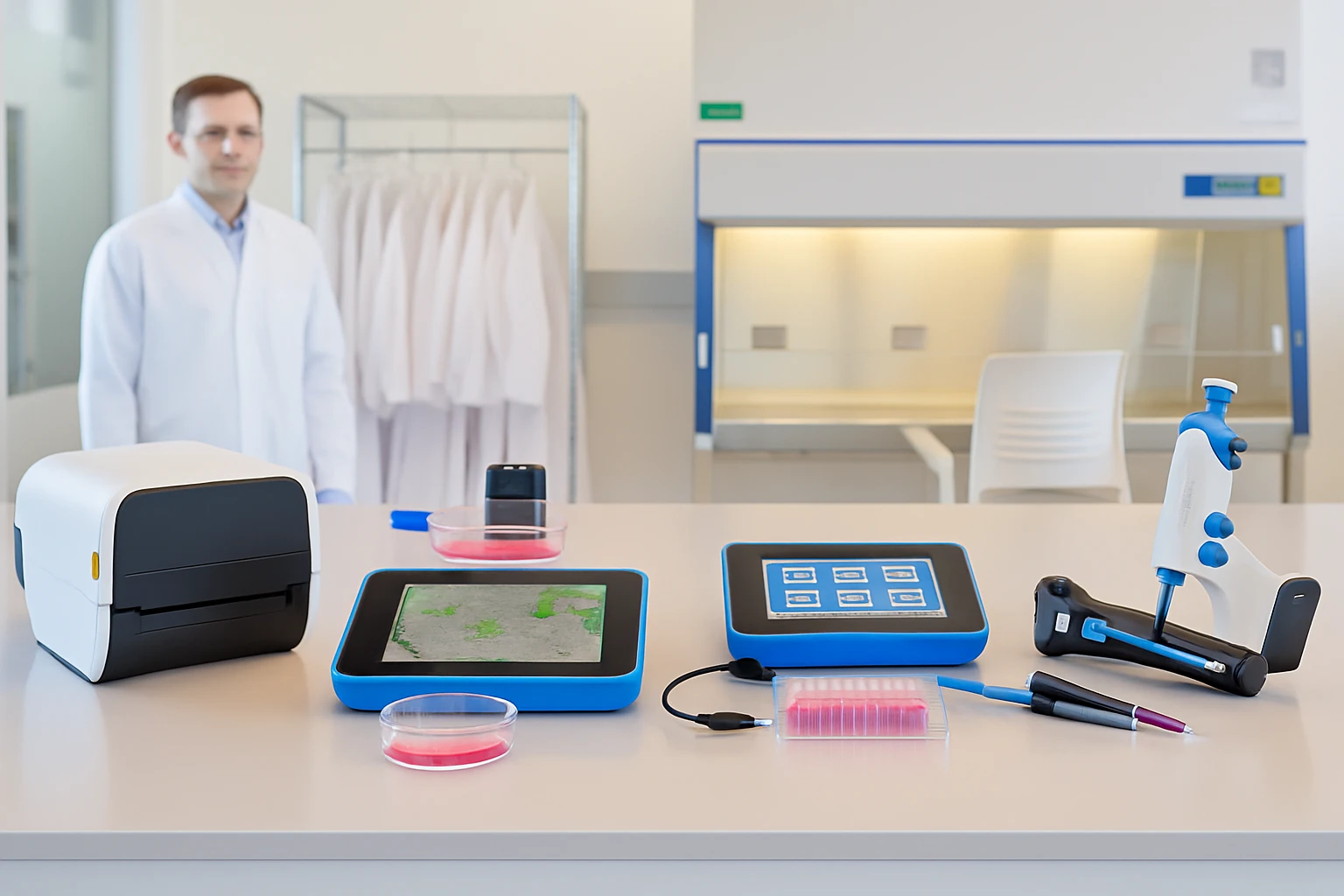
Benchtop Instruments
One of the biggest strengths of benchtop equipment is flexibility. If a project moves to another room, a team grows, or a new type of work starts, you can simply lift or roll the instrument to a new spot. This makes it easy for each group to create its own small area for example, a molecular biology corner, a cell culture corner or a sample prepreparation corner without changing the whole lab layout. For labs that do many small experiments instead of a few very big runs, this kind of flexibility is very helpful. It's also easier to test new technologies on benchtop instruments; if the method doesn't become routine, the lab is not stuck with a big, permanent system taking up space.
Benchtop instruments are also a gentler financial step. They usually cost less than large floor-standing versions with very high capacity, so a lab can try a new technique, show that it works and only then decide if it's worth scaling up. Because the instrument sits right in front of the people who use it, they naturally feel responsible for it: they clean it, write down runs, notice strange sounds or temperatures and catch small problems early. In teaching labs, benchtop devices are easier to place close to students and to use during hands-on training training.
However,the same things that make benchtop instruments so useful in the beginning can become problems as the lab grows.The biggest issue is capacity. A small incubator or centrifuge that was perfect last year can start to slow everything down when the number of samples or classes doubles. Instead of running one large, well-planned batch, the team ends up waiting in line, doing multiple runs and finishing late.To cope with this, labs often add a second or third benchtop unit. This helps for a while, but it also means more devices to keep track of, more power sockets to find and more equipment surfaces to clean and maintain. Over time, the bench can start to feel crowded and harder to manage.
Benchtop instruments also have to share space with people. As more units appear on the bench centrifuges, readers, balances , shakers , meters , pipette stands, laptops can quickly make the surface crowded. This leaves less room for simple but important work like labeling tubes, weighing samples, writing notes or arranging racks. A messy bench doesn't just look bad it makes it easier to spill something, mix up samples or damage equipment by accident. For larger or heavier benchtop units, or ones that vibrate a lot, a normal bench might not even be the safest place. High-speed runs, big rotors or heavy loads can create vibration, noise and movement if the table isn't strong or stable enough.
There's also more hidden work when you have many small devices instead of one central system. Every benchtop instrument needs its own checks, maintenance, software or firmware updates and calibration. Parts like filters, lamps, seals and gaskets all need to be tracked separately. In a small lab this is manageable, but in a busy facility with many benchtop units, it can quietly take a lot of staff time and attention. When a benchtop instrument stops working, the overall impact is usually smaller than a big floor-standing system failing, but if that device is essential for one team, even a small breakdown can still slow down their results.
Overall, benchtop instruments are best suited to flexible, changing labs with low to medium workloads. They make it easy to get started, rearrange equipment and try new methods without big investments or construction work. Their weaknesses start to show when the workload becomes heavy, when benches get full and when the number of small devices grows faster than the lab's ability to organize and maintain them. Used in the right way, benchtop instruments are a great option but pushed too far can slowly turn a lab into a crowded and hard to manage space.
Floor-Standing Instruments: Pros and Cons
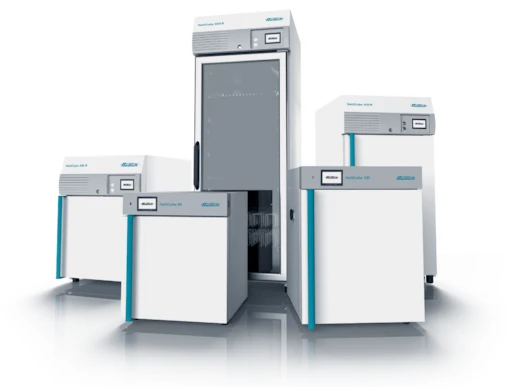
Floor-Standing Instruments
Floor-standing instruments are the heavy lifters in a lab. Instead of sitting on a bench, they stand on the floor on their own frame or base, and they are usually built to handle larger volumes, longer runs and tougher conditions. Examples include tall refrigerators and ultra-low freezers, big incubators and ovens, high-capacity centrifuges, large analyzers, full-size biosafety cabinets and fume hoods . These systems are not meant to be moved around often. Their main role is to give the lab a strong, stable setup that can support daily routine work.
One of the biggest strengths of floor-standing equipment is its capacity and stamina. These instruments are designed to take bigger loads, process more samples in each run and keep working for long periods without stopping. A large centrifuge can spin many blood bags or bottles at once, a tall incubator can hold lots of flasks, and a big freezer can store samples for whole projects or even an entire department. Because they can handle more at a time, the lab often needs fewer cycles, sees fewer queues and enjoys smoother workflows when things get busy. In the long run, one good floor-standing unit can be more efficient than several smaller benchtop devices trying to do the same job.
Floor-standing systems also help create clear, organized workflows. Because they are big and hard to move, they naturally turn into fixed stations in the lab: the main storage area, the main centrifuge zone, the main incubator, or the main analyzer line. People quickly learn that certain types of work always happen at that spot, which makes training easier and reduces confusion. In labs that follow strict quality standards, using one central, high-capacity instrument for key steps can also simplify paperwork, validation and routine checks, because most of the work passes through the same machine.
Ergonomics is another strong advantage. Floor-standing units are usually designed with heavy loads in mind, such as big racks, rotors, trays or sample boxes. Doors, handles and loading heights are set so that users can slide items in and out with less lifting above shoulder level. This matters a lot for big centrifuges and freezers , where the contents can be quite heavy. In long or multi-shift labs, this kind of design helps reduce tiredness and improves safety. A well-placed large unit can also cut down on the constant walking between many small benchtop devices scattered around the room.
On the negative side, floor-standing instruments need more planning and commitment. Before delivery, you have to check that the floor can support the weight, that the unit can fit through doors and lifts, and that there is enough space around it for air flow and service work. Many models need their own power lines, sometimes with surge protection or backup, and some require water, drains or exhaust connections. Once installed, they are not easy to move, so choosing the wrong location can become an expensive and disruptive mistake.
These systems also create a different kind of risk when they fail. A large freezer holding years of samples, a central analyzer handling most daily tests, or the only big incubator in the building can all become single points of failure. If one of them goes down, an entire part of the lab may slow or stop. That is why service contracts, preventive maintenance and backup plans are especially important for floor-standing units. The impact of a breakdown is bigger, but this also makes it easier to justify strong support and planned downtime.
Another drawback is reduced flexibility. If your lab often changes focus, moves rooms or buildings, or regularly tests new layouts, a heavy floor-standing instrument can feel like a fixed anchor that everything else must adapt to. A position that worked well last year might feel awkward for this year's projects. Unlike a small benchtop device that you can move in a few minutes, shifting a large system usually needs several people, special tools and sometimes help from building or facility staff.
In short, floor-standing instruments are best for stable, high-volume, long-term work. They are at their best when the lab already knows which methods are well established, which sample volumes are consistent and which steps truly need a powerful central "workhorse." Their main strengths are high capacity, long run times, consistent performance and the ability to support standardised workflows. Their main weaknesses are higher upfront cost, the need for careful site planning, the bigger impact of downtime and less flexibility once installed. With good planning and solid backup strategies, a floor-standing system can turn a busy lab from constantly catching up into calmly keeping pace with demand.
Practical Scenarios (Make It Real)
Every lab is at a different stage and uses its equipment in a different way, so there is no single rule that always says "go benchtop" or "go floor-standing." The table below shows how different types of labs typically balance the two formats in real life, based on their workload, constraints and long-term goals.
Lab Type / Situation | Typical Workload & Environment | Main Challenges | Recommended Format Emphasis | Typical Instruments by Format | Practical Tips for Setup |
New research lab setting up for the first time | 3-5 people, mixed methods, grant-based projects, changing priorities, limited initial budget | Unclear long-term volume, frequent method changes, need to get up and running quickly | Mostly Benchtop | Benchtop: small centrifuge, mini incubator, PCR/ thermal cycler , microplate reader, analytical balance, small shaker , compact refrigerator/freezer. Floor-standing: maybe 1 shared autoclave or glassware washer. | Start with modular benchtop "islands" (molecular corner, spectroscopy corner, cell corner). Leave clear floor space in case one method grows and later needs a larger floor-standing workhorse. |
Busy hospital or diagnostic lab | High daily sample volume, continuous operation, strict turnaround times, heavy regulatory focus | Maintaining throughput, minimizing downtime, standardizing results across shifts and staff | Mostly Floor-Standing + Strategic Benchtop Backup | Floor-standing: high-capacity centrifuges, tall refrigerators, ULT freezers, large analyzers , full-size biosafety cabinets, main autoclaves, glassware washers. Benchtop: small centrifuges, tabletop analyzers for STAT/urgent work. | Place floor-standing units in clearly defined zones (pre-analytical, analytical, storage). Use benchtop devices near sample reception or emergency areas for urgent tests and backup when central systems are busy or under maintenance. |
Teaching lab that changes every semester | Rotating student groups, different subjects each term (micro, biochem, analytical, etc.) | Constantly changing experiments, many inexperienced users, need for clear visibility and safe access | Primarily Benchtop + Few Shared Floor-Standing Utilities | Benchtop: balances, visible-light spectrophotometers , mini centrifuges, small incubators, shakers, hotplates, simple meters. Floor-standing: central autoclave, main glassware washer, one shared refrigerator/freezer. | Position benchtop units directly at student benches for hands-on learning. Use mobile carts for some devices so you can reconfigure between courses. Keep large floor-standing utilities in a prep room managed by staff. |
Growing industrial / pharma QC lab | Routine batch testing, rising production, repeated methods, increasing sample counts | Avoiding bottlenecks, maintaining consistency, scaling without constant re-layout | Mixed: Floor-Standing for Routine, Benchtop for Development & Troubleshooting | Floor-standing: stability chambers , large ovens, big incubators, high-capacity centrifuges, large sample storage freezers, main analyzers. Benchtop: small HPLC/UV systems for method development, small ovens, trial equipment. | Move established, high-volume tests onto floor-standing systems and keep benchtop units in a separate development area. This separates routine, validated methods from experimental or optimization work and keeps QC flow stable. |
Satellite / field or point-of-care lab | Low to moderate sample numbers, limited space, basic infrastructure, often closer to patients | Minimal utilities, limited technical support, need for simple, robust operation | Mostly Benchtop / Compact Systems | Benchtop: small analyzers, compact refrigerators, tabletop centrifuges, small incubators, portable meters. Floor-standing: rarely more than a single fridge or small cabinet if space allows. | Choose rugged benchtop devices with simple interfaces and low maintenance. Plan for easy shipping and occasional replacement rather than heavy service. Keep footprints small to leave room for basic sample handling and PPE storage. |
Central core facility or shared service lab | Serves multiple departments, scheduled access, large mixed workloads, advanced techniques | Balancing access for many users, managing bookings, ensuring consistent performance and uptime | Floor-Standing Backbone + Targeted Benchtop Support | Floor-standing: flagship analyzers, large incubators, big centrifuges, ULT freezers , major imaging or analysis systems. Benchtop: prep centrifuges, small readers, sample-prep tools at side benches. | Use an online booking system for major floor-standing instruments. Add benchtop prep stations around them so users can prepare samples without blocking the main machine. Plan service windows well in advance and communicate widely. |

Teaching Laboratory
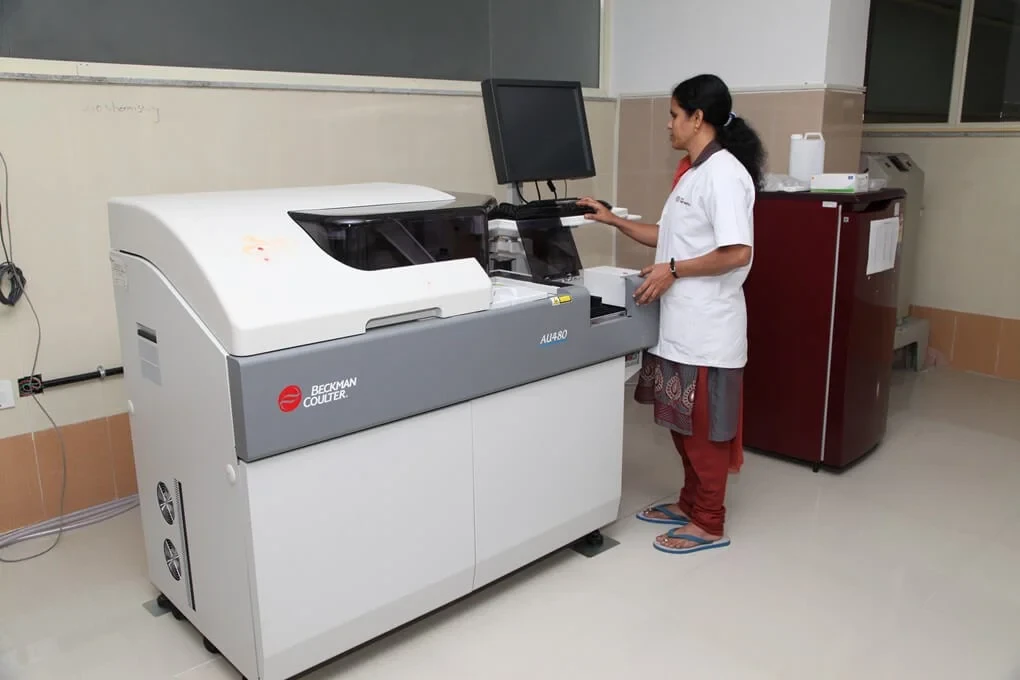
Diagnostic Laboratory
These scenarios make it easier to match the format to the reality of your lab. Early-stage and teaching labs usually lean on benchtop flexibility, while busy clinical, QC and core facilities depend on floor-standing workhorses and use benchtop units to support development, prep work and backup.
Key Factors to Consider Before You Choose
- Start by thinking about how much work the instrument needs to handle: benchtop units suit low or irregular sample volumes, while floor-standing systems are better for stable, high-throughput tasks.
- Look at your lab space realistically; if benches are crowded but there is free floor area, a floor-standing unit can free up valuable working space on the bench.
- Check your power and utilities in advance, because benchtop instruments are usually plug and play, whereas larger floor-standing models may need dedicated power, water, drainage or exhaust.
- Consider how often your lab layout changes, since labs that frequently reconfigure benches, add new projects or may move soon benefit more from the flexibility of movable benchtop equipment.
- Think about handling and safety, because heavy loads, large rotors and bulky racks are safer and more comfortable to manage at floor level on a floor-standing instrument.
- Keep the future in mind: if a method is still on trial, a benchtop unit keeps your commitment low, but if it is already a core, long-term routine, investing in a robust floor-standing workhorse is usually the smarter choice.
Move from Thinking to Choosing
Choosing between benchtop and floor-standing lab instruments is not about which one is better in general, but about which one matches the way your lab really works. Benchtop models fit best when space is limited, workloads are light to medium, and you need the freedom to move or re-arrange equipment. Floor-standing systems make more sense when you need high capacity, long daily run times and a stable layout that is unlikely to change often.
In the end, a good decision respects three simple things: the space you have, the amount of work the instrument must handle, and the comfort of the people who use it every day. Once these are clear, it becomes much easier to see whether a compact benchtop unit, a heavy duty floor-standing model, or a combination of both will serve your lab best.If you'd like help matching the right configuration to your applications, contact us through our website and our team will recommend suitable options for your lab..